
What Is Hemiplegia?

Your central nervous system is made up of your brain, brainstem, and spinal cord. This system allows you to process sensory information and coordinate motor function, enabling you to move and perform other necessary daily tasks.
If you sustain any damage to the central nervous system, one of the issues you can develop is hemiplegia. Keep reading to learn more about it and whether you might be able to pursue a personal injury claim following an accident.
What Is Hemiplegia?
Hemiplegia is not a condition itself. Instead, it is a symptom of a spinal cord or brain injury. It describes a type of paralysis that impacts only one side of your body. You won’t be able to control or move the muscles on the affected side. Some people experience completely limp muscles, while others have spastic hemiplegia, which causes muscles to contract uncontrollably.
Hemiplegia can occur for a number of reasons, including infections, seizures, and strokes. It can also be the result of trauma. Car accidents and falls are common causes, and even birth injuries could be a cause.
Treatment for hemiplegia depends on the cause. Sometimes addressing the underlying issue is enough to restore some or all sensation and motor function, but that’s not always possible. All too often, permanent damage to the spinal cord or brain can mean dealing with hemiplegia for the rest of your life.
Is Filing a Personal Injury Claim Possible After Developing Hemiplegia?
If you have developed hemiplegia, filing a claim may be possible if you can demonstrate that negligence or wrongful conduct caused your injury. To do this, you must establish that the other party owed you a duty of care that they failed to uphold. If their conduct directly resulted in your injuries, you may be able to file a claim.
This is not a simple process, however. You will need to gather a significant amount of evidence, which is always complex but can be even more so if you’re dealing with any type of paralysis. When fighting for compensation, you can expect significant pushback from insurance companies. They may try to blame you for the incident that led to your losses.
In Texas, you can typically still recover losses if you were partly responsible for your injuries, but your liability generally must not surpass 50%. Your compensation will usually be diminished by your degree of fault, however, so it’s essential that you have someone by your side fighting to protect your rights.
Additionally, there is the statute of limitations you must abide by. These are timelines that dictate how long you have to file a claim. In Texas, you typically have two years to file a lawsuit after an injury caused by someone else’s negligence. If you miss this deadline, you may not be able to file a claim against the other party or recover your losses.
Without an attorney, you may also not be fully able to calculate your damages. Hemiplegia could leave you unable to work for the rest of your life or could lead you to need nursing assistance. Your compensation should take that into account. An attorney can assess your exact requirements.
Contact the Friendswood Brain Injury Lawyers at The Law Firm of Alton C. Todd Personal Injury Lawyers to Schedule a Free Consultation
After suffering injuries because of another party’s negligence or wrongful conduct, you may be able to pursue a claim to hold them liable. To have the best chance of obtaining fair compensation, it’s essential that you work with an experienced attorney.
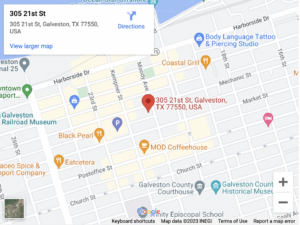
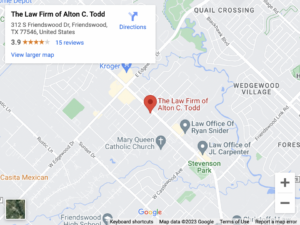
Please contact an experienced brain injury lawyer at The Law Firm of Alton C. Todd Personal Injury Lawyers to get a free initial consultation today. We have offices in Friendswood and Galveston, Texas:
The Law Firm of Alton C. Todd Personal Injury Lawyers – Galveston Office
2101 Mechanic St. Suite 253
Galveston, TX 77550
(409) 207-9299

The Law Firm of Alton C. Todd Personal Injury Lawyers – Friendswood Office
312 S. Friendswood Dr.
Friendswood, TX 77546
281-992-8633